

Tutor booking platforms are SaaS scheduling with a teaching layer, and most students book them against a single number: the overall band they need. That is not how the other side reads a file. If you want tutoring time to buy the thing admissions actually measures, it helps to know how do admissions teams at top universities assess english language proficiency for international applicants in practice, and the answer is sitting in their published program rules.
How do admissions teams at top universities assess English language proficiency for international applicants?
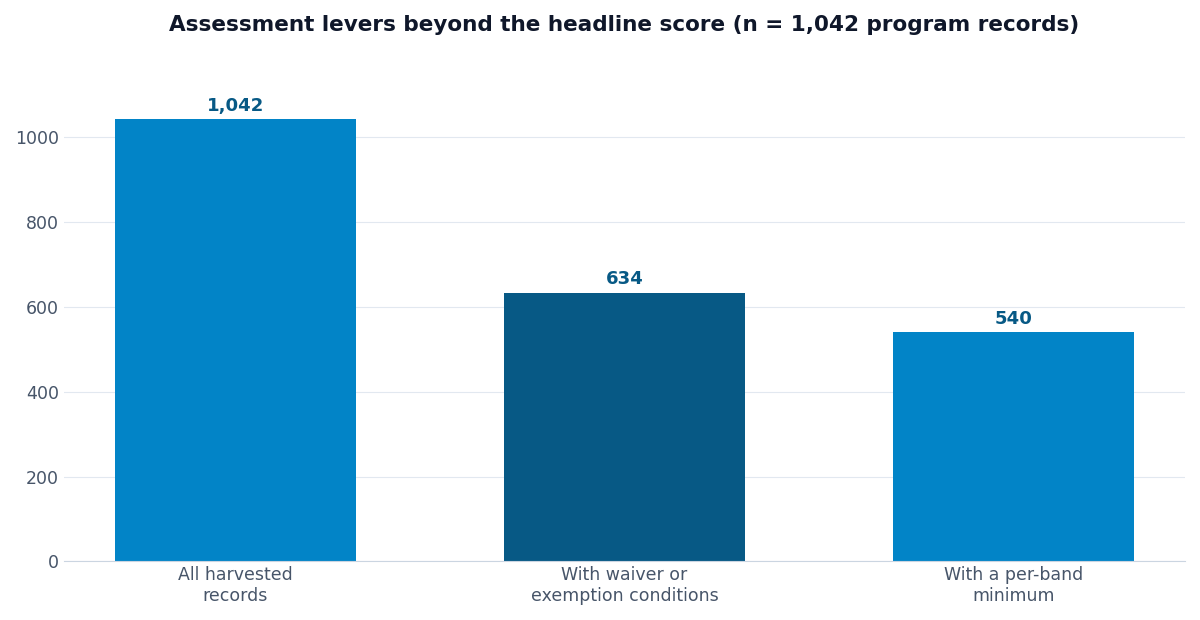
We harvested 1,042 program records from this site's database through its public search index. Every record carries a headline requirement, but the assessment does not stop there. A per-band minimum appears in 540 records: the team is checking that no single skill falls below a floor, so a strong average cannot hide a weak writing score. And 634 records, six in ten, carry waiver or exemption condition text. Those conditions are the second lever: prior study in English, a degree taught in English, or schooling in an approved country can exempt an applicant from the test entirely, and several records describe pre-sessional courses or conditional offers for applicants who land just below the direct-entry score.
So the real assessment has three parts: the headline score, the floor under each band, and a set of published escape routes. A student who only knows the first part can spend ten tutoring sessions raising an overall score when the actual problem is one band, or when an exemption made the test optional months ago.
Most records carry at least one lever
The two levers overlap more than students expect. Of the 1,042 records, 327 carry both a per-band minimum and waiver condition text, and only 195 carry neither. In other words, about four in five programs in this database assess English proficiency with at least one mechanism beyond a single headline number. The conditions text also holds a third pattern worth knowing about: staged bars. One graduate program in the records sets different English requirements for teaching roles than for admission itself, a lower set for graders and a higher one for instructors, so the assessment follows the job the student will actually do, not just the seat they will sit in.
For a student booking tutoring, the implication is simple and slightly uncomfortable. The scarce resource is not information; the requirements are published and countable. The scarce resource is correctly aimed effort. Sessions booked before you have checked your exemption status and your weakest band are sessions bought blind, and no scheduling platform, however smooth its calendar, can fix aim.
What to check in a booking platform, as a student
- Real availability: can you see open slots and book instantly, or does "booking" mean a WhatsApp message?
- Reminders: session reminders cut no-shows on both sides.
- Progress dashboard: scores per skill over time, not just session counts. Per-skill is the view the per-band floor demands.
- Cancellation policy: life happens. 24-hour free cancellation is the fair standard.
- Price per session versus packages: packages look cheaper until the tutor ghosts.
A good scheduling system means the tutor spends lesson time teaching, not texting. If booking takes more than two minutes, the platform failed its one job.
A good tutor, it is worth adding, will ask for exactly this information before the first session: your target programs, your last score by section, and whether you have checked the waiver conditions. A tutor who books you for a generic "IELTS improvement" package without asking has told you something about the package. The assessment levers are published, they differ by program, and ten minutes with the requirements pages will tell a competent tutor more about what your sessions should contain than a month of unfocused practice would.
Schedule the levers, not just the score
The practical routine: before booking a block of sessions, check whether you are exempt, then find your lowest band, then book tutoring against that band. Between sessions, the 8-Week Score Sprint Planner turns your current score, target and test date into daily tasks, so the tutor's hour is spent on judgement and feedback while the plan carries the routine practice. That division of labour, platform for booking, planner for the days between, tutor for the skills that need a human eye, is what the requirements themselves suggest.
Sources: IELTS